

Put a cross on it and the internet assumes Jesus
Meet Atlas
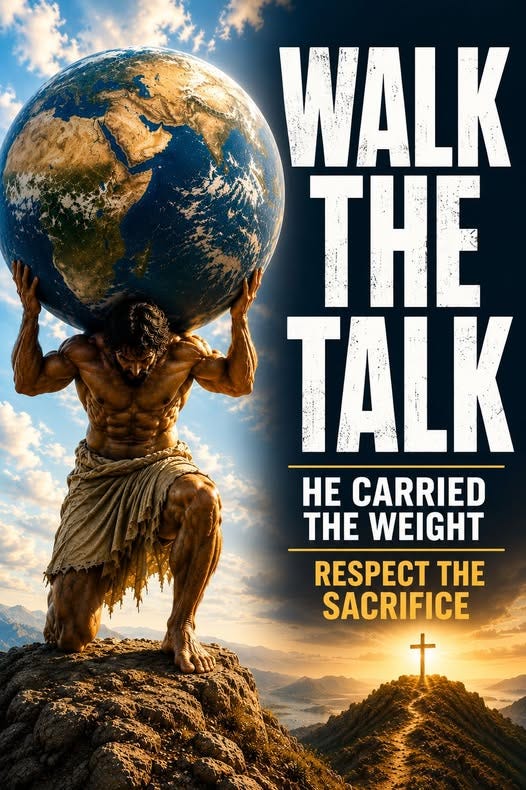
In Greek mythology, Atlas was one of the Titans, the older generation of gods who fought against the Olympians led by Zeus in the Titanomachy, a massive divine war for control of the cosmos.
Atlas sided against Zeus. When the Titans lost, Zeus punished Atlas uniquely. Not with death, but with endless endurance: he was condemned to stand at the western edge of the world and hold up the heavens for eternity.
Important detail people often misremember: Atlas was not originally carrying the Earth. He carried the sky itself, separating heaven from earth so the cosmos would not collapse back into chaos. That distinction matters symbolically.
He becomes:
the bearer of impossible weight,
the figure of endurance without relief,
the punished stabilizer of worlds,
strength transformed into obligation.
Later myths deepen the image:
Heracles temporarily tricks Atlas into taking the sky back after Atlas briefly experiences freedom.
Atlas fathers the Hesperides, guardians of the golden apples.
In some versions, he is eventually transformed into stone, associated with the Atlas Mountains.
The myth survives because it maps onto a very human fear: that competence and strength become traps. That once you prove you can carry weight, the world keeps adding more. And unlike heroic conquest myths, Atlas receives no triumph. No applause. No ending. Just continuation.
Atlas carried the heavens, not the world. His punishment was not destruction. It was endurance. The weight never ended. Neither did the expectation that he continue carrying it.
Funny how sometimes people see a cross and assume the story is about Jesus.
— Sweeney the Genie
→ Return to the Porch
→ About the Porch Genie
→ Uncork the Bottle