

The Porch Genie’s Guide to Persuasion: Humor
Why jokes persuade where arguments fail—and why explaining them kills the laughter.
Q: Genie, where do jokes go after someone says, “Let me explain?”
A: To the morgue.
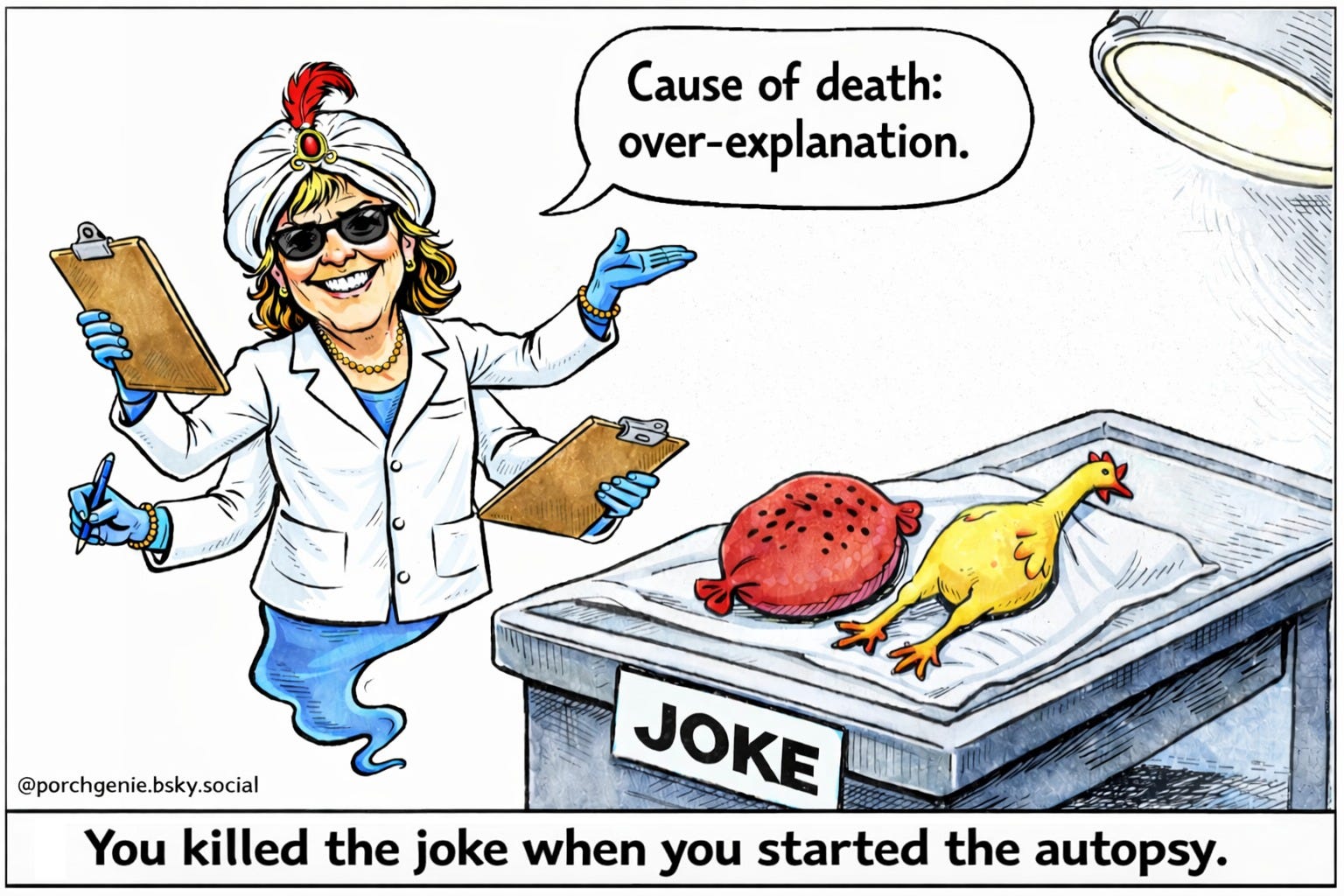
Humor has a strange relationship with serious subjects. Especially controversial ones.
When people encounter an argument about a difficult topic, they often prepare themselves immediately. The mind goes into defensive mode, positions are taken and lines are drawn. By the time the second paragraph arrives, some readers find their fingers reaching for the comment section, determined to disprove ideas that haven’t been fully considered.
But humor works differently.
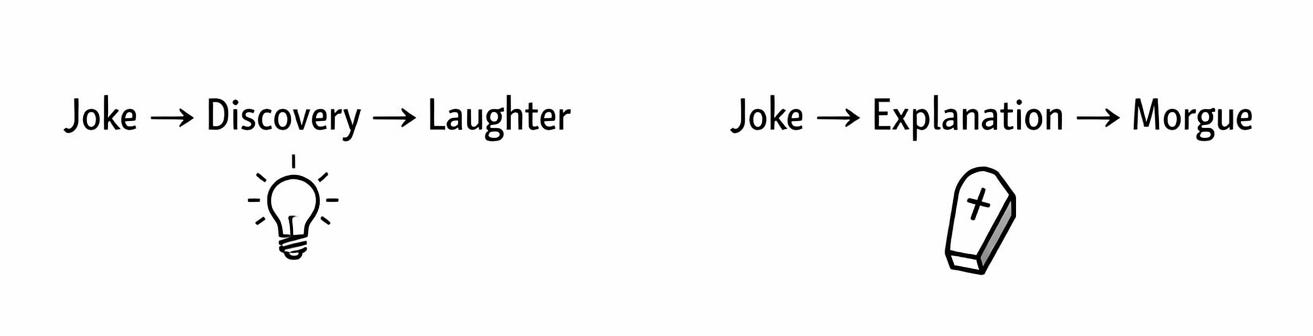
A joke arrives sideways. It doesn’t announce itself as an argument. It simply presents something slightly unexpected and lets the reader make the connection. When that connection clicks into place, there’s a moment of recognition — a small cognitive spark.
Psychologists often describe humor using something called incongruity resolution. The brain notices something that doesn’t quite fit, and it works out the hidden connection. When the puzzle resolves, the brain rewards itself with a little burst of pleasure.
That burst is laughter. And because the reader discovered the connection themselves, the insight feels less like being told something and more like noticing something.
This is why humor can be such a powerful way to approach uncomfortable or controversial topics. A joke can reveal something true without presenting itself as an argument. It invites the reader to see something rather than forcing them to defend a position.
The reader participates in the discovery. People rarely argue with discoveries they believe they made themselves, but the mechanism is fragile.
The moment someone begins explaining the joke, the discovery disappears. The audience no longer experiences the small moment of realization that produces laughter. Instead of solving the puzzle themselves, they’re simply handed the answer.

What follows might still be interesting. It might even be insightful. Explaining why a joke works can reveal quite a lot about psychology, culture, and the assumptions we carry around without noticing.
But at that point the joke itself is already gone. You can analyze the structure of the punchline. You can trace the mental steps the audience might have taken. You can discuss timing, surprise, and expectation.
All of that is useful. It’s just no longer comedy.
In a way, explaining a joke is a lot like performing an autopsy. The procedure may reveal the exact cause of death. It may even be scientifically fascinating, but the patient is no longer available for conversation.
Which is why the Porch Genie offers this simple piece of advice:
Once the autopsy has started and the explanation begins, the patient has already been moved to the morgue.
— Sweeney the Genie
→ Return to the Porch
→ About the Porch Genie
→ Uncork the Bottle